🔴 E³UDRES² Live Lecture Days

Get inspired by free online lectures

Ready to listen to interesting talks by lecturers across the E³UDRES² Alliance? The E³UDRES² Live Lecture Day is a 2-day marathon of interesting online lectures where students, researchers, staff, and stakeholders from all over Europe come together to explore fresh ideas and shape the future of our regions.

Passionate and innovative lecturers will be taking part with their own lecture, providing engaging knowledge to a community of 100.000+ students as well as researchers, E³UDRES² staff and other E³UDRES² stakeholders. Attendees can choose which lecturers they want to join, registering for the lectures they are interested in beforehand.

E³UDRES² Live Lecture Days 2026: All facts at a glance

Date

25-26 March 2026

Time

09:00 - 17:00 (CET)

Setting

Online

Build your custom programme

During the Live Lecture Day, each lecture lasts for one hour including interactive elements and Q&A sessions.

Which lectures you want to join is fully up to you: Register for the lectures that spark your curiosity and build your own personal schedule!

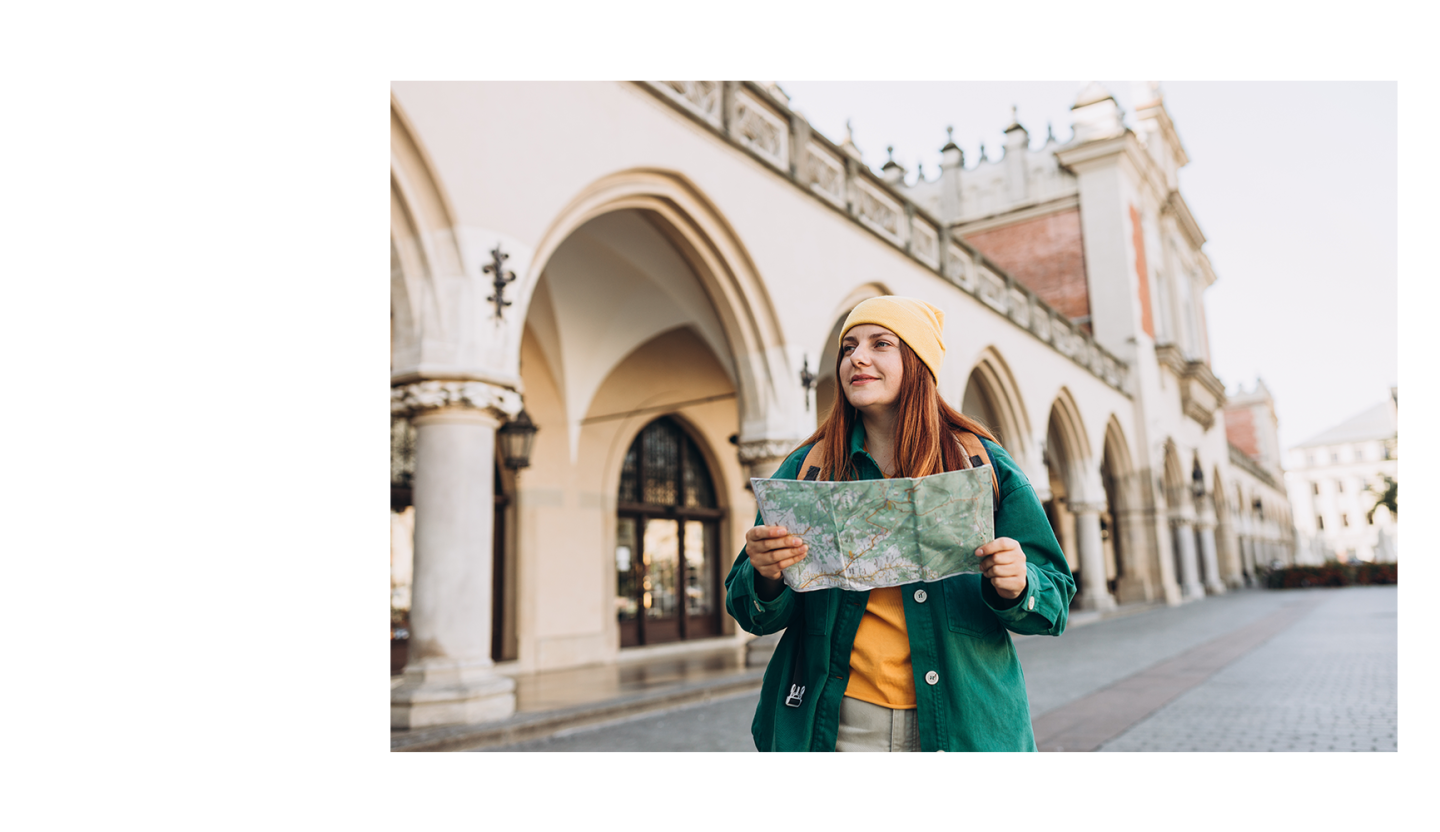
young woman with a backpack and a map standing outside.

Who can join the E³UDRES² Live Lecture Days?

Students

Learn from top lecturers across Europe, gain new perspectives, and discover innovative solutions for the future. Students will also receive a certificate of participation for each lecture they attend!

Researchers & Lecturers

Get inspired by your peers, discover new collaborations, and connect with the next generation of thinkers.

E³UDRES² Staff & Stakeholders

Be part of a Europe-wide exchange and join cross-sectoral collaboration.

Lectures & Registration

Browse the lectures offered during the E³UDRES² Live Lecture Days 2026 below. All lectures are hosted online via MS Teams. On both days, lectures take place in parallel. You can pick individual lectures you'd like to listen to to build your own custom programme per day. Please register for each lecture individually.

Wednesday, 25 March 2026 - Session A

with Dr. iur, Irena Liepina, Assistant Professor at Vidzeme University of Applied Sciences, Latvia

The aim of the course is to develop students' knowledge and skills in the international and European legal business environment, in the development of rights and policies, including topical areas such as sustainability, competitiveness, the European Green deal, financing opportunities and the development of standardized rules and contracts.

Within the course "Legal and Institutional framework of International Business", students are taught critical thinking and legal reasoning, basic law enforcement and interpretation skills, foundation of rights creativity initiatives and lobbying, business conversations, dispute prevention and resolution skills. The course is related to the legal environment of international business, based on examples and judgements of courts and play-offs of situations, based on the professional and academic experience of lecturers.

Timezones

9:00–10:00 (CET) | 8:00–9:00 (WET) | 10:00–11:00 (EET)

with Marcel Slootweg, MA, Lecturer and Researcher at Saxion University of Applied Sciences, the Netherlands

More than ever before, companies are facing the challenge of developing a strategy that enables them to deal with changing geopolitical developments. In this lecture I'll look closer at the difference between geopolitical climate and weather and how companies can adapt to this new situation.

Timezones

10:00 - 11:00 (CET) | 09:00 - 10:00 (WET) | 11:00 - 12:00 (EET)

with Francesca Allievi, PhD, Senior Lecturer at JAMK University of Applied Sciences, Finland

In 2004, the Nordic Kitchen Manifesto was signed by a dozen of chefs from Nordic countries, establishing ten key points including health, sustainability, season and quality. The following year, responsibility was handed over to the Nordic Council of Ministers, making New Nordic Food part of the political agenda. The movement is now gaining new momentum, in support of the Vision 2030 of Nordic countries to be the most sustainable and integrated region in the world: by putting the focus on food systems that are healthy, environmentally sustainable and tied to the local traditions, yet innovative and attractive, the resilience of the Nordic region is strengthened. In this lecture, we present the New Nordic Food history and framework, as well as its applicability to other regions, advocating for food systems to become a crucial entry point for an innovative and sustainable regional development.

Timezones

11:00 - 12:00 (CET) | 10:00 - 11:00 (WET) | 12:00 - 13:00 (EET)

with Jutta Nihtilä, MSc, Senior lecturer at JAMK University of Applied Sciences, Finland and Petrus Syvänperä, MSc, Senior Lecturer at JAMK University of Applied Sciences, Finland

Would you like to become a purchasing professional who can deliver clear savings and value to your organisation? Would you like to add value, enjoy success and increase profitability? Purchasing expertise can offer all this and more!

This session will emphasise the importance of purchasing by exploring three key pillars: balancing costs, risks, and value. The themes of sustainability and resilience are important when it comes to managing and supporting a Resilient Economy and Innovation for Regions.

Timezones

12:00 - 13:00 (CET) | 11:00 - 12:00 (WET) | 13:00 - 14:00 (EET)

with Gunita Ķiesnere, Head of New Building School at Vidzeme University of Applied Sciences, Latvia

Bio-based construction is rapidly emerging as one of Europe’s most powerful pathways for decarbonisation, regional development, and circular innovation. This 40-minute lecture reveals how agro-materials such as hemp, straw, and perennial grasses can transform the construction sector while generating new value for farmers, industry, and communities. Drawing on recent project work with stakeholders, youth, and regional partners, the lecture explains practical supply-chain solutions, policy needs, and future skills required for a climate-positive construction ecosystem. Participants will discover how “green circles” - integrated regional bioeconomy systems - can create jobs, improve soils, store carbon, and reduce emissions. If you’re interested in sustainable materials, rural innovation, architecture, engineering, or climate solutions, this lecture will give you a clear, inspiring look at the future of Europe’s bioeconomy and your potential role within it.

Timezones

13:00 - 14:00 (CET) | 12:00 - 13:00 (WET) | 14:00 - 15:00 (EET)

with Dr. Shab Hundal, Senior Lecturer at JAMK University of Applied Sciences, Finland

Over the last decade or so, there has been an exponential rise in awareness regarding the interplay between sustainability and financial aspects of business organizations. The firm-level Environmental, Social, and Governance (hereafter, ESG) performance indices are generally accepted as sustainability metrics in the modern-day corporate world. In the dynamic corporate settings, it is difficult to imagine if the phenomenon of sustainability metrics can remain standalone or decoupled from other key aspects related to business organizations.

In the aftermath of major corporate financial scandals, and global recession at the beginning of the twenty first century, and then followed by the Covid-19, there has been ever-mounting pressure on the business organizations to accept and reflect their commitments and actions for the wellbeing of their stakeholders and not merely catering to the interests of their shareholders. Consequently, modern-day firms are incorporating multiple dimensions of ESG in their vision, mission, strategy, and planning. Furthermore, firms disclose their sustainability performance in a similar fashion to their financial performance reports and disclosures. There is also emphasis on developing and enhancing standardization and transparency in ESG reporting.

The current study is an attempt to explore the effects of firm-level ESG scores on the financial performance of Finnish companies.

Timezones

14:00 - 15:00 (CET) | 13:00 - 14:00 (WET) | 15:00 - 16:00 (EET)

with Prof. Yurii Ataman, Head of Physical Therapy, Occupational Therapy and Sports Medicine Department at Sumy State University (Ukraine)

For the past four years, the Ukrainian state has been facing numerous challenges arising from Russian aggression. The enemy deliberately targets the most sensitive and critical links in the functioning of our society, particularly the healthcare sector. Even before the war, the healthcare system was far from optimal and was only at the initial stages of reform, with many areas requiring significant improvements. The war has dramatically increased the burden on all its components, sometimes by many times, exposing weaknesses and creating new problems. This has led to a wide range of challenges, particularly in the field of physical therapy, which has been severely affected. This lecture will focus on analyzing these issues in detail, sharing practical experiences in overcoming difficulties, and assessing the short- and long-term prospects of rehabilitation in Ukraine.

Timezones

15:00 - 16:00 (CET) | 14:00 - 15:00 (WET) | 16:00 - 17:00 (EET)

with Tomi Hiltunen, MEd, Senior Lecturer at JAMK University of Applied Sciences, Finland

If any organisation today wish to innovate in a future-proofed and resilient way, they must embrace BEING BROKE as one of the core paradigms in their thinking process. How would we solve this problem if we didn't have any money? Modern organisations tend to only throw money at problems and fail to identify the underlying conditions, which leads to repetition and complexity - not innovation and simple solutions. The lecture and examples lean heavily on the nature of the service industry, but learnings can be applied to all other industries as well. In the lecture, 10 key points will be delivered on how companies and organisations can avoid common thinking traps and how to look at problems from a refreshing new perspective.

Timezones

16:00 - 17:00 (CET) | 15:00 - 16:00 (WET) | 17:00 - 18:00 (EET)

Wednesday, 25 March 2026 - Session B

with Katariina Korniloff, PhD, Principal Researcher at JAMK University of Applied Sciences, Finland and Kari-Pekka Murtonen, Chief Specialist and Head of Global Action at JAMK University of Applied Sciences, Finland

This lecture discusses how digitalisation and AI-enabled solutions can support scalable service models in primary care and low-resource settings. The focus is on practical approaches that help regions strengthen capacity when specialist expertise is limited and service needs are high.

The lecture highlights practical opportunities and limitations of AI-supported solutions, including decision support, personalisation and scaling multidisciplinary expertise into primary care. A central theme is task shifting supported by digital platforms, where selected tasks can be redistributed across professional groups and supported self-management, while maintaining quality and accountability. Participants will explore a short case example and reflect on how digital-first rehabilitation models can be adapted to local realities while maintaining ethical standards, inclusion and evidence-based practice. The session is relevant for students, researchers and stakeholders interested in applied digital solutions for regional health and wellbeing.

Timezones

09:00 - 10:00 (CET) | 08:00 - 09:00 (WET) | 10:00 - 11:00 (EET)

with Riikka Sinivuo, MNSc, Senior Lecturer at JAMK University of Applied Sciences, Finland

Nearly 25% of global deaths are linked to environmental conditions. Additionally, healthy environment could prevent nearly 25% of the global disease burden. Current environmental crisis deeply affects health globally and increases social inequities. The health impacts of environmental conditions occur not only directly but indirectly and must be understood and considered also in the areas that are not yet facing the impact directly.

Children are particularly vulnerable to environmental risks and safe, healthy and protective environment is essential for child’s growth and development to their full potential. Reducing environmental risks could prevent deaths in children under 5 years significantly.

Accidental injuries are one of the most common reasons for death both in children and adults. Majority of accidents happen at home or during leisure time activities. Increasing the health and safety of the childhood environment is essential in global health promotion and closely connected with environmental crisis and social inequities.

Timezones

10:00 - 11:00 (CET) | 09:00 - 10:00 (WET) | 12:00 - 13:00 (EET)

with Dr. Lutz Siemer, Lecturer Social Work at Saxion University of Applied Sciences, the Netherlands

This live lecture explores how fields related to health, wellbeing and social inclusion can critically respond to the intertwined challenges of digitalisation, artificial intelligence and sustainability. Digital and AI-based tools are often introduced to increase efficiency and improve decision-making, yet they also raise concerns regarding resource use, acceleration, standardisation and their impact on social relations and participation.

The session introduces a pragmatic 3×3 reflection framework that helps students analyse digital practices across three dimensions of sustainability (social, ecological and economic) and three analytical levels (activities, tools and professional discourses). Using a short, practice-oriented case example, participants apply the framework in a guided way and reflect on opportunities, risks and professional boundaries of AI-supported practices.

The lecture focuses on developing critical judgement rather than technical expertise and supports students in forming a reflective professional stance in digitally transformed health and social fields.

Timezones

11:00 - 12:00 (CET) | 10:00 - 11:00 (WET) | 12:00 - 13:00 (EET)

with Katrien Dewaele, Teacher and Researcher at UCLL University of Applied Sciences, Belgium

Artificial Intelligence is a disruptive innovation for society as a whole, and particularly for foreign language education.

In this lecture, we explore why it is essential for language teachers to develop a forward-looking mindset and to reflect on possible future scenarios for language education in the so called AI-era.

The session introduces strategic foresight and speculative design as powerful approaches to imagine, discuss and critically assess different futures. By exploring plausible scenarios, teachers gain the tools to anticipate change, question existing assumptions, and make thoughtful, informed decisions for their classrooms and institutions. The goal is not to predict the future, but to engage with it consciously and to position foreign language education as a meaningful, future-proof domain in an AI-driven world.

Timezones

14:00 - 15:00 (CET) | 13:00 - 14:00 (WET) | 15:00 - 16:00 (EET)

with Thierry Tartarin, MEd, Senior researcher at Saxion University of Applied Sciences

The Weconomy Transition Canvas is a tool that enables organizations to reflect on their operations and gain new perspectives. A practical workbook for an organizational approach to transition programs between parties (citizens, businesses, and government) designed for transition managers, process directors, regional accelerators, and all other people committed to realizing changes around the combined challenges of sustainability, circularity, livability, and biodiversity.

Timezones

15:00 - 16:00 (CET) | 14:00 - 15:00 (WET) | 16:00 - 17:00 (EET)

Thursday, 26 March 2026 - Session A

with Dipl.-Ing. Michael Macher, Junior Professor at USTP University of Applied Sciences St. Pölten, Austria and Dipl.-Ing. Peter Hackl-Lehner, Technical Head Audio at USTP University of Applied Sciences St. Pölten, Austria

Our talk explores how AI can increase inclusivity for people living with disabilities—often through tools already in your pocket. Aimed at health-tech enthusiasts and anyone curious about practical assistive technology, we combine real-world examples with guidance you can use immediately.

We’ll present two to three short case studies showing how AI supports everyday independence. One example is vision assistance through apps like Be My Eyes, connecting blind and low-vision users with real-time help. A second example highlights a voice-cloning project we developed with a person who lost his tongue, enabling communication in a familiar, personal voice. We’ll also touch on smart captioning, speech-to-text, and sound recognition that improve access in lectures, workplaces, and daily life.

Finally, we’ll discuss what makes these solutions succeed (or fail): usability, privacy, bias, accessibility-by-design, and involving disabled users throughout development. Participants will leave with a curated toolkit, practical tips, and a glimpse of emerging inclusive AI research.

Timezones

09:00 - 10:00 (CET) | 08:00 - 09:00 (WET) | 10:00 - 11:00 (EET)

with Yuliia Kovalenko, PhD, Researcher at Vidzeme University of Applied Sciences, Latvia

The Lecture explores how narrative thinking, multimedia tools, and location-based technologies can transform ordinary tourist paths into emotionally engaging journeys. The lecture introduces key concepts of digital storytelling, storyboarding for place-based experiences, and interactive mapping using AR/VR. Through practical examples from Ukrainian and European cultural heritage, we will examine how tourism can evolve from simple navigation to immersive storytelling. Participants will engage with visual storyboard samples, share interpretations, and explore how to apply these techniques in their own regional contexts. The session is designed for students, educators, and creatives interested in cultural tourism, media, communication, and regional development.

Timezones

10:00 - 11:00 (CET) | 09:00 - 10:00 (WET) | 11:00 - 12:00 (EET)

with Gonçalo Justino, PhD, Adjunct Professor at Polytechnic University of Setúbal, Portugal

Can you imagine regional health systems that anticipate disease, personalise care, and promote long-term wellbeing by seamlessly integrating molecular information with digital intelligence? We will explore how multi-omics and applied deep tech can transform regional healthcare into smart, resilient, and sustainable health systems, extending advanced biomedical capabilities beyond major metropolitan centres. By combining proteomics, metabolomics, and systems biology with digital pipelines, automation, and computational analysis, cutting-edge science is translated into practical, inclusive infrastructures accessible to regions of different and resources. The session demonstrates how these approaches enable disease stratification, biomarker-driven decision-making, and personalised interventions, while strengthening health equity, system resilience, and quality of life. Emphasis is placed on human-centred innovation, positioning digital deep tech not as an abstract technological layer, but as a societal enabler embedded within regional ecosystems. Through concrete examples and interactive discussion, participants will discover how molecular science can actively shape healthier, more sustainable regions across Europe.

Timezones

11:00 - 12:00 (CET) | 10:00 - 11:00 (WET) | 12:00 - 13:00 (EET)

with Sandrina Moreira, PhD, Full professor at Polytechnic University of Setúbal, Portugal

This lecture, delivered as part of the E³UDRES² Live Lecture Day, invites participants to critically explore the paradigm shift from traditional economic growth toward Doughnut Economics, as proposed by Kate Raworth. It begins by examining the historical trajectory and limitations of GDP-centric development, then contrasts it with the Doughnut - a framework that aims to ensure social foundations for all while respecting planetary boundaries.

Through comparative global data and reflections on diverse national realities, the session discusses the relevance of concepts such as green growth, post-growth, and degrowth, particularly for high-income countries.

The lecture encourages an open dialogue on reimagining progress in alignment with both equity and sustainability goals.

Timezones

12:00 - 13:00 (CET) | 11:00 - 12:00 (WET) | 13:00 - 14:00 (EET)

with Sanna Nieminen, D.Sc. (Tech), Principal Lecturer at JAMK University of Applied Sciences, Finland

To foster innovation and business development, SMEs must act as active agents within their networks. The aim of our study was to investigate industrial SMEs’ experiences of network agency. We conducted 12 semi-structured group interviews with key personnel and core team members of industrial SMEs. The findings are presented as a model of SMEs’ network agency, comprising five components. At its core are (1) the network of actors, (2) the characteristics of collaboration among these actors, and (3) the perceived benefits of network agency. These core elements are further shaped by (4) enabling factors and (5) inhibiting factors. The study offers new insights into the characteristics of network agency in the context of industrial SMEs and provides practical guidance for strengthening it.

Timezones

13:00 - 14:00 (CET) | 12:00 - 13:00 (WET) | 14:00 - 15:00 (EET)

with Sari Karppala, MA, Senior Lecturer at JAMK University of Applied Sciences, Finland

Transportation causes approximately 20% of global carbon dioxide emissions, yet it is not necessarily on the radar of companies purchasing transport services as it is not the biggest cause of emissions for them. An EU directive guiding the calculation of transport emissions is available and based on the ISO 14083 standard. The guidance is valid for companies providing transportation services as well as to the companies buying them.

Timezones

14:00 - 15:00 (CET) | 13:00 - 14:00 (WET) | 15:00 - 16:00 (EET)

with Dr. Sibylle Moser, Head European Center for Culture & Creativity at USTP University of Applied Sciences St. Pölten, Austria

What drives people to visit exhibitions, heritage sites or historic gardens —and why do some walk away uninspired? How do age, gender, and educational background shape engagement with cultural heritage or art works? And how can augmented reality (AR), virtual reality (VR), or serious games transform the visitor experience?

This online lecture offers an accessible introduction to audience behavior in museums and heritage sites across Europe. Through real-world examples, we explore key challenges in user experience (UX) design in diverse settings.

Students will reflect on their own preferences as cultural visitors and gain an introduction to basics tools of audience profiling. By applying such tools, institutions can design meaningful experiences for diverse target groups—from tech-savvy teens seeking interactive formats to senior visitors who prefer more traditional approaches.

Join us to rethink cultural participation and discover how digital innovation can open new pathways to art and heritage.

Timezones

15:00 - 16:00 (CET) | 14:00 - 15:00 (WET) | 16:00 - 17:00 (EET)

with Sara Johanna Maria Laurijssen, MA, Lecturer and Researcher at Saxion University of Applied Sciences, the Netherlands

Students are increasingly confronted with a rapidly changing world shaped by armed conflicts, artificial intelligence, and political polarization. These developments bring complex ethical questions into the classroom, challenging both students and educators. While students look to teachers for guidance, educators must balance their professional responsibilities with personal beliefs and values.

How can teachers help students explore moral dilemmas without imposing their own perspectives? And how can classrooms remain socially safe while allowing space for disagreement and diverse viewpoints?

This lecture examines the ethics of education by first addressing the moral responsibilities of teachers and academic staff through relevant ethical frameworks. It then translates theory into practice by offering concrete tools to facilitate respectful dialogue and support students in forming their own well-reasoned positions.

Open to educators from all backgrounds, the session invites reflection and discussion on what it means to teach responsibly in times of societal uncertainty and moral complexity.

Timezones

16:00 - 17:00 (CET) | 15:00 - 16:00 (WET) | 17:00 - 18:00 (EET)

with Dr. Mihaela Pisleaga, University Assistant at Politehnica University Timisoara, Romania

This presentation examines fluid turbulence as a fundamental physical phenomenon at the intersection of scientific observation, mathematical description, and creative interpretation. It begins with the visual studies of the Renaissance, particularly those by Leonardo da Vinci and Michelangelo, who intuitively captured the complex structures of water movement and the human body, anticipating modern concepts such as vorticity and energy transfer.

The discussion then moves to the scientific formulation of fluid flow, from Euler’s idealized models to the Navier–Stokes equations, which account for viscosity and explain the emergence of turbulent regimes. The limitations of analytical approaches to turbulence are highlighted, alongside the essential role of experimental and computational methods developed in the twentieth century, which enabled the visualization and analysis of complex flow phenomena.

Finally, the presentation explores how scientific models of turbulence are applied today in numerical simulation, data visualization, and parametric design, translating mathematical relationships into visual and spatial forms. It argues that a rigorous understanding of fluid flow provides a framework for interpreting regional identity, where processes of transport, energy dissipation, and flow dynamics shape natural landscapes, infrastructure, and contemporary cultural expression.

Timezones

17:00 - 18:00 (CET) | 16:00 - 17:00 (WET) | 18:00 - 19:00 (EET)

Thursday, 26 March 2026 - Session B

with Kati Jokio, MSc, Senior lecturer at JAMK University of Applied Sciences, Finland

Experiences of equal opportunities and social inclusion in education, both for children and young people, are an essential part of understanding what an individual's role is and will be like in society. Feelings of otherness and exclusion often run through adolescence and sometimes continue into adulthood and working life. Students who have had significant learning support needs during basic education usually move on to further education with support. The greater the need for support, the more limited the opportunities for transitioning to secondary education after basic education.

Achieving equal opportunities is not easy even after education, as the transition to work life requires support and guidance, as well as welcoming reception and attitudes in the workplace. This webinar discusses equality and social inclusion in the context of special vocational education in Finland. It also discusses how various multi-professional support measures and career guidance support the development of educational and professional careers for people who have needed strong, multidisciplinary support during their education.

Timezones

09:00 - 10:00 (CET) | 08:00 - 09:00 (WET) | 10:00 - 11:00 (EET)

with Thomas Reinder Riemersma, LL.M, Lecturer at Saxion University of Applied Sciences, the Netherlands

Compliance with anti-money laundering legislation (AML) by legal professionals from the perspective of small island state in the Kingdom of the Netherlands. I used to be Head of the AML supervision department before I came back to the Netherlands. International legislation puts a compliance burden in the practice of numerous professionals, and is furthermore harmonized within the EU with a new AML Regulation and a seventh AML Directive. Relevant for students in numerous future professions.

Timezones

10:00 - 11:00 (CET) | 09:00 - 10:00 (WET) | 11:00 - 12:00 (EET)

with Leen Alaerts, Teacher educator at UCLL University of Applied Sciences, Belgium

In several countries the existing system of secondary education is challenged by a new grammar of schooling. These circumstances evoke teacher educators to reflect on the question: how can teacher education programs train students to become change-competent professionals in a changing educational field? In order to address this research question this Practical Research Project (PWO Leermodern, 2022-2025) established a network of 11 Flemish University Colleges.

This network engaged itself for in 8 design teams, 3 network events and a needs analysis: a survey conducted at 350 new graduates and in-depth interviews with 35 school leaders. In this session the final results will be presented: the needs analysis in schools; the inspirational guide for teacher educators with 6 building blocks and the manual for teachers with 12 educational dilemma’s on grammar of schooling (Onderwijsdilemma’s, 2025, ACCO) More information on: https://research-expertise.ucll.be/nl/product/onderwijsdilemmas

Timezones

11:00 - 12:00 (CET) | 10:00 - 11:00 (WET) | 12:00 - 13:00 (EET)

with Ana Gabriela Gonçalves Neves Gomes, PhD - Professor at Polytechnic University of Setúbal, Portugal and Ana Cláudia Cavaco de Sousa Coelho, PhD - Professor at Polytechnic University of Setúbal, Portugal

This seminar explores the challenge of feeding a projected global population of 10 billion by 2050 without intensifying climate change. It highlights how not all nutrients have the same environmental footprint, emphasizing that producing high-biological-value nutrients, especially protein, is far more resource-intensive than producing calories. Traditional livestock systems are presented as environmentally unsustainable due to greenhouse gas emissions, land and water use, deforestation, biodiversity loss, and antibiotic overuse. The session introduces alternative protein sources, including insects, microbial fermentation (fungi, yeast, bacteria), cultivated meat, microalgae, and 3D-printed foods. Benefits, technological potential, and sustainability advantages are discussed alongside key barriers such as consumer acceptance, regulatory hurdles, cost, and sensory challenges.

Timezones

12:00 - 13:00 (CET) | 11:00 - 12:00 (WET) | 13:00 - 14:00 (EET)

with Grace Lis Porto, MA, Researcher at USTP University of Applied Sciences St. Pölten, Austria

Stop "guessing" and start "directing." In this 40-minute session, we will demystify the mechanics of interaction with Large Language Models (LLMs) like ChatGPT, Gemini, Claude, Copilot, and others. The goal is to replace randomness with precision through a structured path for prompt construction.

Participants will explore how different AI engines process instructions and learn a universal framework to craft prompts that deliver consistent, high-quality results. We will move beyond simple text entry to understand context, constraints, and intent. Whether you are using AI for research, content creation, or daily tasks, this lecture provides a clear roadmap to transform these tools into reliable collaborators. By the end, you will have the "master key" to communicate effectively with any AI, ensuring the output aligns with your specific goals every time.

Timezones

13:00 - 14:00 (CET) | 12:00 - 13:00 (WET) | 14:00 - 15:00 (EET)


Any Questions?

Get in touch with us through our contact form or write to your local E³UDRES² team.

The message has been sent successfully.

Unfortunately, an error has occurred. Please check the entered values.

Some required fields are not filled yet, please fill them in order to continue.